Explore our resources by research/diagnostic specialty or content type
ALPCO specialists are leveraging their extensive expertise to create a growing collection of resources for your research and testing. Find resources that benefit your work using the handy filters.
This infographic distills the essence of the new American Gastroenterological Association (AGA) Clinical Practice Guideline on the Role of Biomarkers in Crohn's Disease (CD). It sheds light on the nuanced recommendations for using biomarkers to monitor and evaluate CD, emphasizing their value in conjunction with clinical symptoms.
Molecular GI testing for bacteria such as salmonella, vibrio, and E. coli, and viral pathogens including norovirus and rotavirus, is instrumental in the diagnosis and treatment of infection and dysbiosis. In addition, many gastrointestinal disorders often require protein biomarker tests to aid in accurate detection and diagnosis. ALPCO has worked with several clinical testing labs to incorporat...
While sending out for calprotectin testing offers some cost and convenience advantages when volumes are very low, bringing the process in-house allows for the opportunity to control costs, turnaround time, and quality. Considering costs and potential revenue, the volume at which in-house calprotectin testing makes sense may be lower than you think.
How to Increase Profitability with In-house C...
ALPCO received 510(k) clearance from the US FDA for its new fecal Calprotectin Chemiluminescence ELISA test.
The ALPCO Calprotectin Chemiluminescence ELISA’s superior clinical accuracy will enable clinical laboratories to provide the most accurate results to gastroenterologists facing the challenges of differentiating IBD from IBS.
FOR IMMEDIATE RELEASE - Salem, NH, October 29, 2019 -...
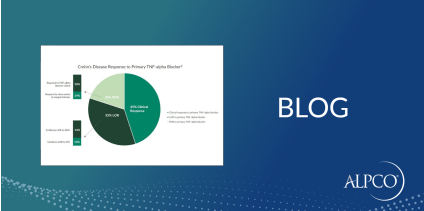
Monoclonal antibody (mAbs) biologics have been used to treat inflammatory bowel disease (IBD) for 20 years1. Despite the successful use of biologics as therapies for Crohn’s disease (CD) and ulcerative colitis (UC), these diseases remain difficult to manage. As a result, patients and healthcare providers are met with many challenges when treating IBD with biologics such as variable drug respons...
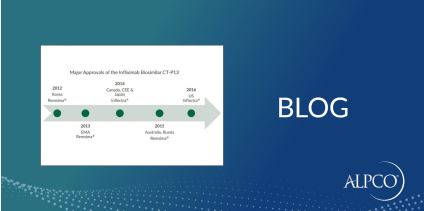
Anti-TNF-alpha biologics have been proven to be effective treatments for autoimmune diseases such as rheumatoid arthritis (RA) and inflammatory bowel disease (IBD)1. Rising healthcare costs as well as patent expirations, however, have prompted the development of biosimilars, such as the infliximab biosimilar CT-P131. The introduction of these drugs also presents the need for a better understand...
Multiple classes of biologics are available for the treatment of inflammation associated with inflammatory bowel disease (IBD) which ultimately improves the quality of life for patients. However, many challenges are associated with using biologics to treat IBD such as immunogenetic reactions and the rising cost of treatment1-4. These challenges are driving the need for more personalized and co...
Monoclonal antibody (mAb) biologics have been used to treat inflammatory bowel disease (IBD) for several years. Various classes of biologics for the treatment of IBD exist and include cytokine blockers and integrin blockers. Within these classes are mAbs that target different proinflammatory proteins such as tumor necrosis factor-alpha (TNF-alpha), interleukin 12 and 23 (IL-12, IL-23), and inte...
[playlist images="false" artists="false" tracklist="false" ids="4600"]
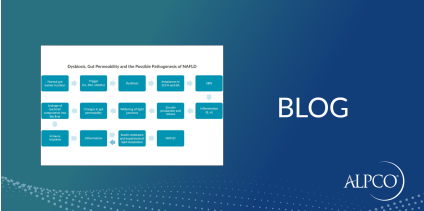
A growing amount of research demonstrates that communication between the gut microbiota and liver is vital for the regulation of energy metabolism1,2. As a result, scientists are further exploring the relationship between the gut microbiota and gut-liver crosstalk to better understand metabolic diseases such as non-alcoho...
We are excited to announce that we will launch new gastrointestinal and inflammatory bowel disease (IBD) assays at Digestive Disease Week® May 7-9, 2017 in Chicago, IL. Included in this release are the Zonulin Stool ELISA and Zonulin Serum ELISA to aid in the study of gut permeability and celiac disease. Both assays specifically quantify levels of zonulin with no cross-reactivity to haptoglobin...