![[Infographic] Biomarker Monitoring for the Management of Crohn’s Disease and Ulcerative Colitis](https://www.alpco.com/media/amasty/blog/cache/b/i/424/211/biomarker-based-monitoring-crohns-disease-infographic_cover.jpg)
[Infographic] Biomarker Monitoring for the Management of Crohn’s Disease and Ulcerative Colitis
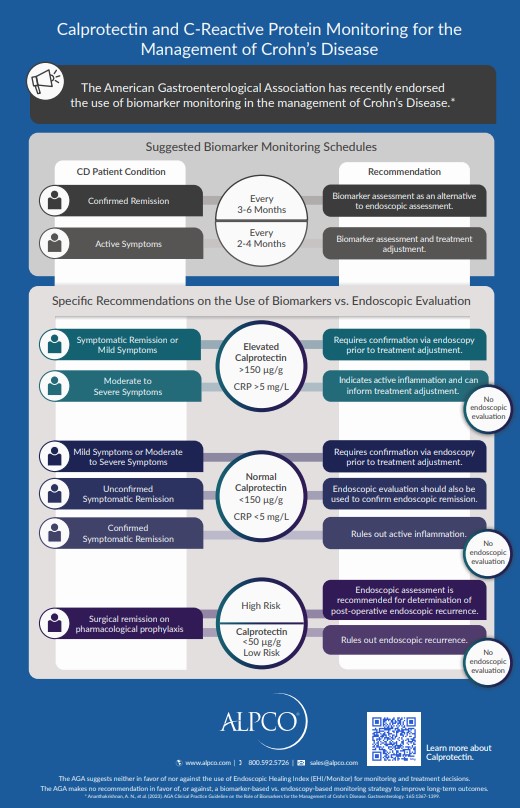
Download our infographics and gain a comprehensive overview of the AGA's guidelines, offering a new perspective on managing Crohn's Disease and Ulcerative Colitis using biomarkers.
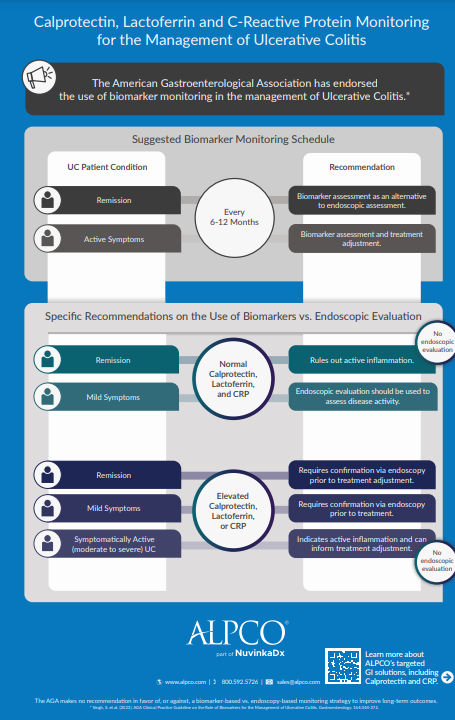
These infographics capture the essence of the new American Gastroenterological Association (AGA) Clinical Practice Guidelines on the Role of Biomarkers in Crohn's Disease (CD) and Ulcerative Colitis (UC). They shed light on the nuanced recommendations for utilizing biomarkers to monitor and evaluate CD and UC, emphasizing their value in conjunction with clinical symptoms, and outlining the strategic use of biomarkers in various scenarios of CD and UC management - from patients in symptomatic remission to those with moderate to severe symptoms.
For Crohn’s Disease, key highlights include the guideline panel's 11 conditional recommendations, particularly focusing on the use of a biomarker-and symptom-based monitoring strategy. It clarifies the significance of fecal calprotectin and CRP levels in assessing disease activity and guiding the need for endoscopic evaluation.
For Ulcerative Colitis, the guidelines focus on the use of fecal calprotectin, fecal lactoferrin, and CRP levels in conjunction with clinical symptoms in assessing disease activity and evaluating treatment options.
While current fecal calprotectin assays are not cleared for therapeutic monitoring, ALPCO offers both automated and manual that are FDA cleared and Health Canada licensed for use as an aid in the diagnosis of CD and UC and the differentiation of inflammatory bowel disease (IBD) from irritable bowel syndrome (IBS).
Ulcerative Colitis
Crohn’s Disease