Explore our resources by research/diagnostic specialty or content type
ALPCO specialists are leveraging their extensive expertise to create a growing collection of resources for your research and testing. Find resources that benefit your work using the handy filters.
The Burden of Inflammatory Bowel Disease in the US and Canada
More than 1 million people in the US and 200,000 people in Canada are currently living with inflammatory bowel disease (IBD). This number is projected to grow exponentially over the next 10 years1,2. As the prevalence of IBD increases, so do direct healthcare costs. Between hospitalizations, surgery, ambulatory care and biologic the...
Date: September 6, 2016
Author: Andrea Tarbet, Product Marketing Associate at ALPCO
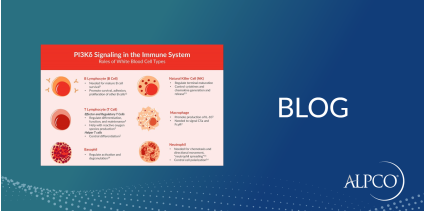
Signaling pathways dictate the differentiation, activation, and functions of immune cells. Even the slightest problem in one cell signaling pathway can transform the immune system and turn it against the body, causing an autoimmune disease. Research has shown that proper phosphoinositide 3-kinase (PI3K) c...
Date: August 16, 2016
Author: Andrea Tarbet, Product Marketing Associate at ALPCO
Bruton’s tyrosine kinase (BTK) inhibitors are not the only kinase inhibitors to enter the fight against B cell cancers. Since there are numerous subtypes of Hodgkin lymphoma (HL) and non-Hodgkin lymphoma (NHL), patients around the world are in need of diverse treatments and cures. As a result, different type...
Date: July 26, 2016
Author: Andrea Tarbet, Product Marketing Associate at ALPCO
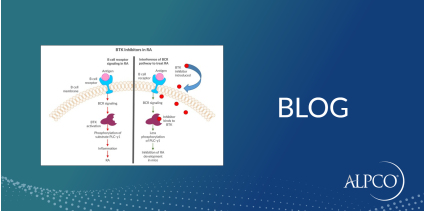
Over the past several years, the drug arsenal to combat B cell cancers has gained a mighty weapon: Bruton’s tyrosine kinase (BTK) inhibitors. The origins of using BTK inhibitors as cancer drug treatments actually began with researching drug treatments for an autoimmune disease. Two decades later, the first BTK...
Date: June 21, 2016
Author: Andrea Tarbet, Product Marketing Associate at ALPCO
Several therapies exist to help treat inflammatory bowel disease (IBD) and improve patient quality of life. However, a growing number of gastroenterologists and patients have been choosing to stop these therapies - a process known as de-escalation. There is currently no standard of care for de-escalating infla...
ALPCO is now offering a new broad range Periostin ELISA that has been optimized to detect all known splicing forms of human periostin. The Periostin ELISA is highly characterized with a full validation package, and offers great reproducibility and precision. Not only are all standards and controls included with the kit, but it can be automated, making the assay both cost effective and flexible ...
May 3, 2016
Leptin resistance is a challenging topic of conversation in obesity. It is defined by a state in which the body does not display any adapted response to high endogenous or exogenous levels of leptin while continuing to maintain excess body weight1. This may be due to a decreased uptake of leptin in the brain, reduced central response to leptin, or hypothalamic inflammation1. Cong...
As a runner, I’ve long been intrigued by what gets me high during my runs. Endorphins, you say? Yes, I’m well aware of those and bless those endorphins. But, I have to say, there’s nothing quite as satiating as a good run and as a scientist by training, I was convinced that there was more to that feeling than endorphins. Turns out, there is.
It wasn’t too long ago that I came acros...
Introduction
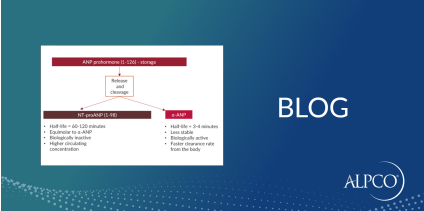
Humans have at least 50 discovered hormones managing vital biological functions in the body. These hormones are produced by the body’s organs and glands. Natriuretic peptides (NPs) are structurally related hormones synthesized and released from the heart, including atrial natriuretic peptide (ANP) and brain natriuretic peptide (BNP). Due to some of the physiological actions of nat...
Date: January 26, 2016
ALPCO recently launched a new panel of 13 stool-based gastroenterology assays that are all compatible with one single extraction step. The unique extraction method allows laboratories to improve their sample processing time by up to 86% by extracting one sample for up to 13 biomarkers. In addition, each of these assays is flexible and can be run manually or on automate...