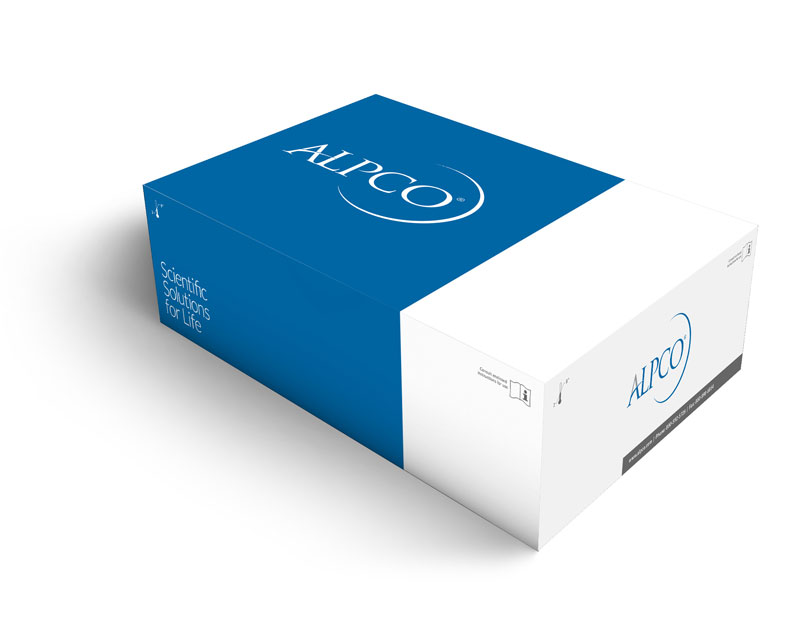
Direct IGF-1 RIA (200 Tubes)
$1,326.00
Catalog
22-IGF-R21
The Direct IGF-1 RIA (200 Tubes) is for the quantitative determination of IGF-I in human serum and plasma. Research Use Only. Not for Use in Diagnostic Procedures.
Dynamic range
0.156-10 ng/mL
Sensitivity
0.064 ng/mL
In order to dissociate IGF-I from the IGFBPs, the samples must be diluted in an acidic buffer. The diluted samples are then pipetted into the assay tubes. The IGF-I antiserum containing an excess of IGF-II is dissolved in a buffer, which is able to neutralize the acidic samples. After the IGF-I antibody solution has neutralized the samples, the excess IGF-II occupies the IGF-binding sites of the binding proteins, thus allowing the measurement of free IGF-I. With this method, the IGFBPs are not removed, but their function and therefore their interference in the assay is neutralized. Due to the extremely low cross-reactivity of th eIGF-I antibody with IGF-II, excess IGF-II does not disturb the interaction of the first antibody with IGFI or IGF-I tracer. The assay is then continued like conventional RIA using a second antibody for the separation of bound and free tracer. The color of the solutions makes possible for every tube a control of the respective performance step. This enables you to check your pipette plan, if necessary. Dilution and acidification buffer (including the reconstituted standards and diluted samples) are colored in green through addition of a pH indicator dye. After addition of the uncolored IGF-I antibody solution, the now neutralized solutions turn blue. Finally, addition of the red-colored tracer solution turns the entire incubation color violet.


Species
Human
Regulatory Status
Research Use Only. Not for Use in Diagnostic Procedures.
Product Distribution
Available in North America Only
Range
0.156 - 10 ng/mL
Sensitivity
0.064 ng/mL
Sizes
200 Tubes
Sample Types
Cell Culture, Plasma, Serum
Inc Time Overnight
No
Inc Time See Protocol
No
Sample Size
5
Detection
I-125