Anti-HAV ELISA
$1,025.00
Catalog
22-HAVHU-E01
The Anti-HAV ELISA is an enzyme immunoassay for the detection of antibodies against the Hepatitis A virus in human serum or plasma.
The catalog number for 22-E10 has been changed to 22-HAVHU-E01.
Research Use Only. Not for Use in Diagnostic Procedures.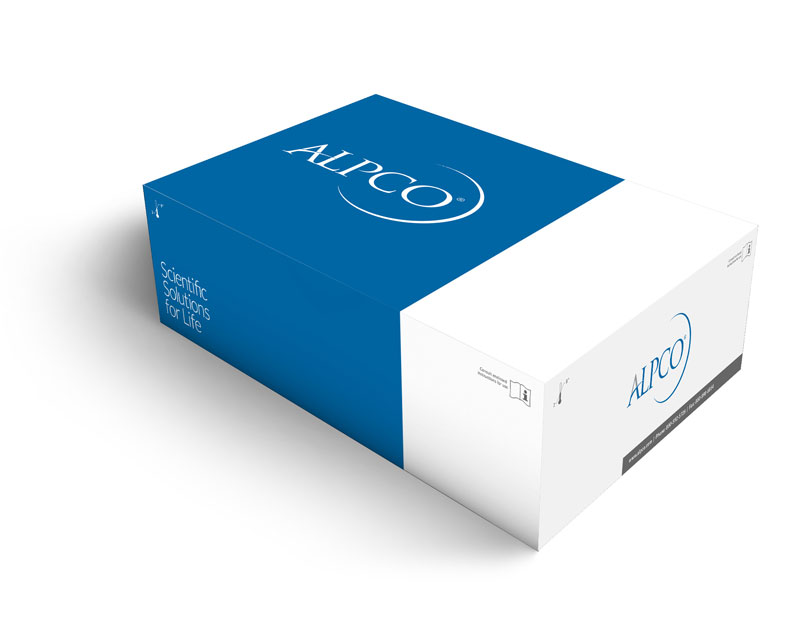
The Anti-HAV ELISA is a pseudo-competitive enzyme immunoassay. Serum or plasma samples are added to the wells of a microplate, which has been previously coated with inactivated HAV antigen, and incubated for 2 hours at 37°C. Anti-HAV antibodies bind to the antigen. The conjugate (peroxidase labeled anti-HAV) is added and incubated again for 1 h at 37°C. Free binding sites of the antigen are bound with conjugate. Excess conjugate is washed off the plate and the substrate is added and incubated for 30 min at room temperature. The bound conjugate changes the color of the subtrate to blue. The reaction is terminated by adding the stop solution. The color turns yellow. The absorbance of the colored reaction product is measured on a microtiter plate reader. The absorbance is reciprocal to the anti-HAV titer. For quantitative determination use the included serum standard for preparation of a titration curve.


Species
Human
Regulatory Status
Research Use Only. Not for Use in Diagnostic Procedures.
Product Distribution
Available Worldwide
Range
3 -50 mIU/ml
Sensitivity
0.1 IU/mL
Sizes
96 Wells
Sample Types
Plasma, Serum
Inc Time Hour
3
Inc Time Minute
30
Inc Time Overnight
No
Inc Time See Protocol
No
Sample Size
10
Detection
Colorimetric