
Angiotensin I ELISA

$740.00
Catalog
74-AG1HU-E01
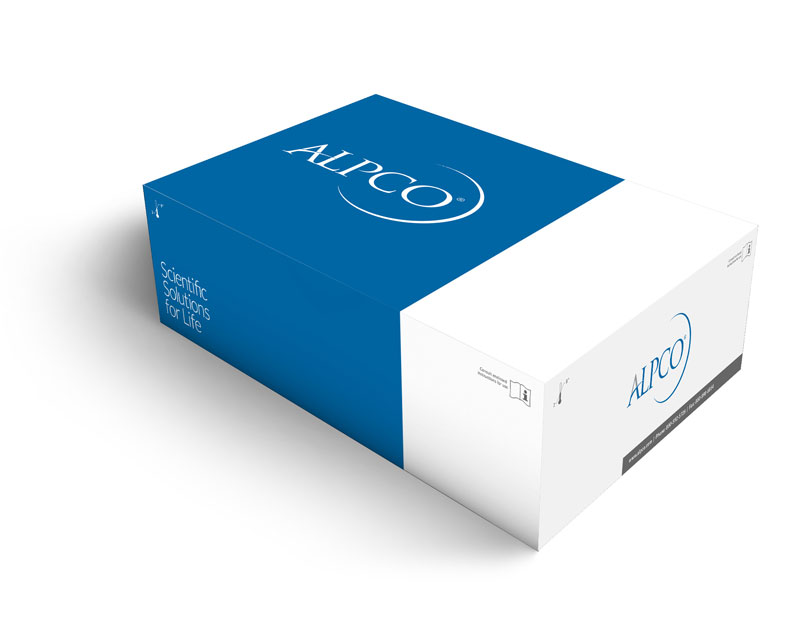
Angiotensin I ELISA is for the quantitative determination of Angiotensin I in serum, and plasma with results in 3.5 hours. Research Use Only. Not for Use in Diagnostic Procedures.
Angiotensins are small peptides derived from angiotensinogen. Several of the known angiotensins are established endocrine effectors in the regulation of blood pressure, but they are also known to have other functions locally, in several organs and tis‐ sues (paracrine) and at the cellular level (autocrine / intra‐ crine) 1,2,3,4. Angiotensin I (DRVYIHPFHL) has no known effector function but it is an immediate precursor of Angiotensin II (DRVYIHPF). Angiotensin II binds AT1 receptors, which promote vasoconstriction, sodium retention, release of aldosterone, release of Arg‐vasopressin, cell proliferation, inflammation, fibrosis, anxiety, and cardiac hypertrophy. Angiotensin A (ARVYIHPF)5, and Angiotensin III (RVYIHPF), also bind AT1 re‐ ceptors. Angiotensin (1‐7) (DRVYIHP) binds a different receptor called MAS‐1 which has opposite effects (vasodilation, natriure‐ sis, antiproliferation, NO release, PGE release, and apoptosis)6. Angiotensin IV (VYIHPF) binds yet another receptor called AT4 (IRAP), which promotes increase of blood flow, angiogenesis, and natriuresis, and which has also been implicated in memory formation and in the pathogenesis of Alzheimer’s disease. The peptide LVV‐hemorphin‐7 (LVVYPWTQRF), which is not an an‐ giotensin, also binds the AT4 receptor. There are other angiotensin peptides that have been identified, including Ang (1‐9) (DRVYIHPFH), Ang (1‐12) (DRVYIHPFHLVI), Ang V(3‐7) (VYIHP), as well as several other shorter peptides that have undetermined functions. Angiotensins can be present in very low concentrations in some biological samples. In such cases, dilution of samples to avoid “non‐specific” interference by any present factors is not productive because the angiotensin analyte is also diluted to levels far below the minimum detection concentration. Thus, investigators have used several procedures for extracting angiotensins from biological samples prior to using them for immunoassays. See, for example: a) C18 extraction of Ang I and Ang II from plasma, eluted with ACN:H2O:AcOH (74:24:4)7 ; b) phenylsilylsilica cartridge extraction of Ang (1‐7) from blood, eluted with methanol8. Please see instructions for use for references.

Regulatory Status
Research Use Only. Not for Use in Diagnostic Procedures.
Product Distribution
Available Worldwide
Range
0.1 - 500,000 pg/mL
Sensitivity
4.3 pg/mL
Sizes
96 Wells
Sample Types
Plasma, Serum
Inc Time Hour
3
Inc Time Minute
30
Inc Time Overnight
No
Inc Time See Protocol
No
Sample Size
500
Detection
Colorimetric


Angiotensin I ELISA

74-AG1HU-E01

Billing Address

Shipping Address

Resources to advance your discoveries 

Recent posts

8 Questions to Ask Before Choosing an Allergy Testing Platform
1. What percentage of your IgE allergy testing panel consists of molecular allergens rather than allergen extracts? The ALEX2 IgE allergen panel consists of 117 extracts and 183 molecular allergens. This represents the largest panel of molecular allergens on the market, including 50 unique...
View Now
Understanding IgE Allergy Test Results
Cases of food and environmental allergies have been increasing over the last decade. While conservative estimates suggest IgE-mediated allergy affects 6-8% of children and 2-3% of adults, some estimates are as high as 30%.3, 2 Symptoms can range from mild to severe and include itching, hives,...
View Now
Improving Food Elimination Diets with IgG Testing
Food sensitivity or food intolerance involves a non-allergic response to a food or food additive. In a recent on-line survey conducted in the U.S., 24% of adults aged 18 to 79 reported a food intolerance. While a food allergy is typically mediated by IgE antibodies, adverse reactions to food...
View Now

Recent posts

An End to Subjective RPR Reading?
An End to Subjective RPR Reading? Development of a Novel Automated Nontreponemal Immunoassay for Syphilis
Discover ALPCO’s novel automated nontreponemal immunoassay for syphilis testing. Reduce subjectivity, improve workflow efficiency, and support faster treatment decisions.
View Now
Variation In Calprotectin Results by Methodology
Same Sample, Different Result? What New Research Reveals About Fecal Calprotectin Variability
In a head-to-head comparison of FDA-cleared assays and a novel ALPCO method, investigators observed wide variability in specificity and false-positive rates across platforms, raising important questions about standardization and clinical interpretation.
View Now
ALPCO News
NuvinkaDx Announces Major Milestones for Portfolio Companies GeneProof and ALPCO
July 22, 2025 – Salem, NH – NuvinkaDx, a leading innovator in diagnostic solutions, today announced two significant product and regulatory milestones from its operating companies, GeneProof and ALPCO.
View Now

Biomarkers of Energy Homeostasis Brochure

Energy homeostasis is a focus of research into diabetes and obesity. Read about how our assays in this area can assist both academic and industry researchers.

Complement System Solutions for Drug Development and Clinical Research Datasheet

The complement system is essential to innate immunity from a variety of diseases. ALPCO’s full range of complement system immunoassays can drive discovery.

Melatonin Products for Sleep Disorder-Related Research Datasheet

The melatonin hormone affects the circadian rhythm and sleep-wake cycle. Find out about our immunoassays and products that explore melatonin and sleep disorders.