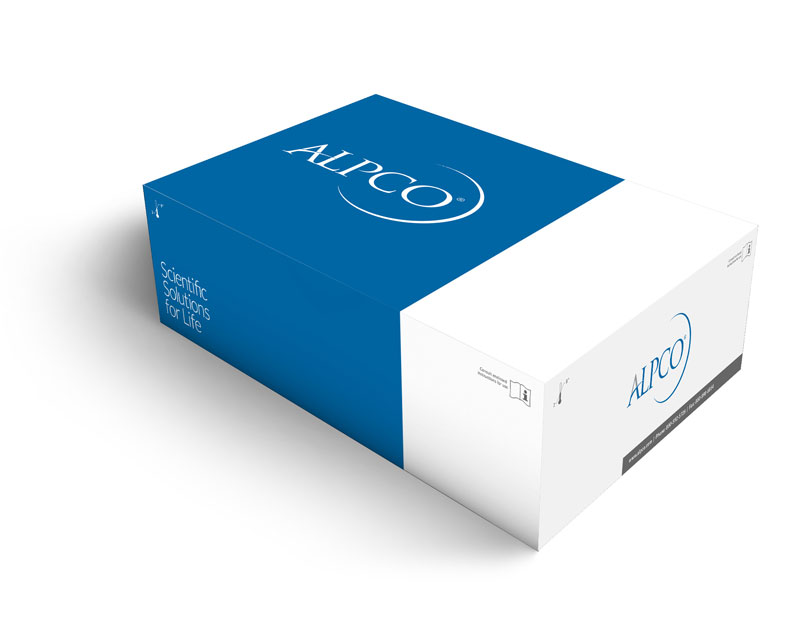
The ALPCO Calprotectin CLIA kit is an in vitro diagnostic chemiluminescent immunoassay (CLIA) intended for use by trained laboratory personnel for the quantitative measurement of fecal calprotectin in human stool.
Calprotectin, a neutrophilic protein, is a biomarker of mucosal inflammation. The ALPCO Calprotectin CLIA assay is intended as an aid in the diagnosis of inflammatory bowel disease (IBD), specifically Crohn’s disease (CD) and ulcerative colitis (UC), and as an aid in the differentiation of IBD from irritable bowel syndrome (IBS) in conjunction with other clinical and laboratory findings. The test is intended to be used with the KleeYa Instrument. For IVD use in Canada.
Proven clinical accuracy vs. colonoscopy ensures reliable reporting
Broad AMR reduces re-tests and increases reportable results
KleeYa automation reduces inter-assay and inter-operator variability
Used with Calprotectin CLIA Re-Calibrator and Control Set: 80-CALHU-FCSET
Calprotectin, a heterodimer comprised of S100A8/A9 monomers, also known as myeloid-related protein (MRP) 8/14 subunits, is an immunomodulatory protein accounting for up to 60% of cytosolic protein in neutrophil granulocytes and macrophages. Calprotectin plays a central role in neutrophil defenses and inflammatory pathologies. Under conditions of intestinal inflammation, calprotectin is released into the gastrointestinal lumen and serves as an accurate biomarker of mucosal inflammation.1
Measurement of fecal calprotectin levels provides valuable information that can assist physicians to determine whether to send inflammatory bowel disease (IBD) patients for colonoscopy or treat them for IBS symptoms.2 Traditionally, IBD activity has been assessed through clinical symptoms, but it has been reported that these recognized activity indexes are subjective and do not correlate as consistently as fecal calprotectin levels with histologic inflammation.3
Calprotectin, a heterodimer comprised of S100A8/A9 monomers, also known as myeloid-related protein (MRP) 8/14 subunits, is an immunomodulatory protein accounting for up to 60% of cytosolic protein in neutrophil granulocytes and macrophages. Calprotectin plays a central role in neutrophil defenses and inflammatory pathologies. Under conditions of intestinal inflammation, calprotectin is released into the gastrointestinal lumen and serves as an accurate biomarker of mucosal inflammation.1
Measurement of fecal calprotectin levels provides valuable information that can assist physicians to determine whether to send inflammatory bowel disease (IBD) patients for colonoscopy or treat them for IBS symptoms.2 Traditionally, IBD activity has been assessed through clinical symptoms, but it has been reported that these recognized activity indexes are subjective and do not correlate as consistently as fecal calprotectin levels with histologic inflammation.3
1. What percentage of your IgE allergy testing panel consists of molecular allergens rather than allergen extracts? The ALEX2 IgE allergen panel consists of 117 extracts and 183 molecular allergens. This represents the largest panel of molecular allergens on the market, including 50 unique...
Cases of food and environmental allergies have been increasing over the last decade. While conservative estimates suggest IgE-mediated allergy affects 6-8% of children and 2-3% of adults, some estimates are as high as 30%.3, 2 Symptoms can range from mild to severe and include itching, hives,...
Food sensitivity or food intolerance involves a non-allergic response to a food or food additive. In a recent on-line survey conducted in the U.S., 24% of adults aged 18 to 79 reported a food intolerance. While a food allergy is typically mediated by IgE antibodies, adverse reactions to food...
In a head-to-head comparison of FDA-cleared assays and a novel ALPCO method, investigators observed wide variability in specificity and false-positive rates across platforms, raising important questions about standardization and clinical interpretation.
July 22, 2025 – Salem, NH – NuvinkaDx, a leading innovator in diagnostic solutions, today announced two significant product and regulatory milestones from its operating companies, GeneProof and ALPCO.
Energy homeostasis is a focus of research into diabetes and obesity. Read about how our assays in this area can assist both academic and industry researchers.
Complement System Solutions for Drug Development and Clinical Research Datasheet
The complement system is essential to innate immunity from a variety of diseases. ALPCO’s full range of complement system immunoassays can drive discovery.
Melatonin Products for Sleep Disorder-Related Research Datasheet
The melatonin hormone affects the circadian rhythm and sleep-wake cycle. Find out about our immunoassays and products that explore melatonin and sleep disorders.